Context
01 – Challenge
02 – What DID I Do
03 – Learnings
Student project
With a large course catalogue, the HSCL sports website makes it hard to search, filter and quickly understand availability on mobile. Our redesign focused on Search, Favourites and Navigation, designed mobile-first.
I worked across UX and UI, turning research insights into flows, interaction patterns and a consistent Figma system. I designed key screens, including the discovery landing page and course cards with clear availability states.
Less debating, more testing, user feedback guided decisions. Team coordination was my biggest challenge, clear tasks, daily check-ins and communication kept us aligned on progress and next steps.

04 – Current State
Desktop-first design
Missing clarity
Existing Experience
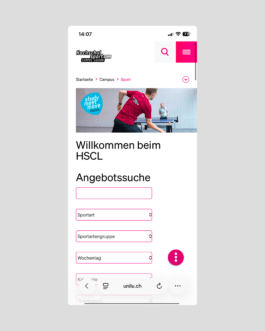
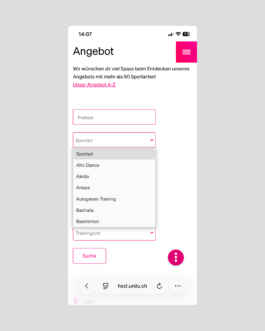
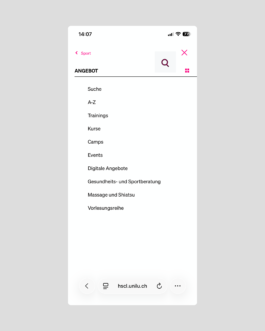
The existing HSCL sports website was mainly designed for desktop and felt difficult to use on mobile-devices.
Search and filters were not intuitive, availability was hard to spot, and there was no quick overview of relevant courses.

Student inputs
Iterative prototyping
How did we tackle
the problem?
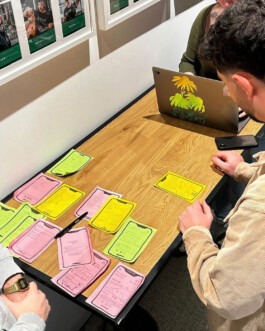
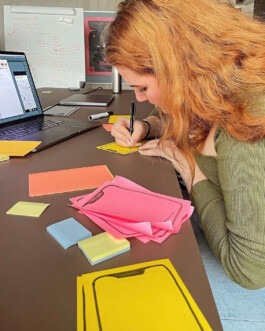
Feedback sessions were used to capture student needs and questions around course discovery and availability.
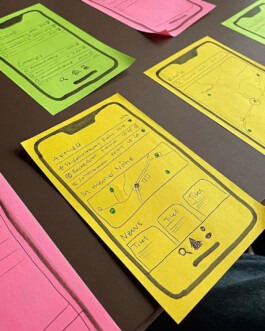
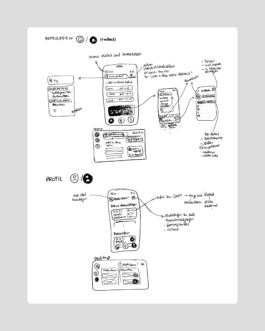
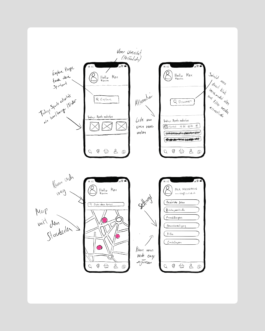
Findings were translated into sketches and low-fi prototypes, then refined through testing and rapid iteration in Figma.


KEY PAIN POINT
Mobile clarity
What actually
mattered?
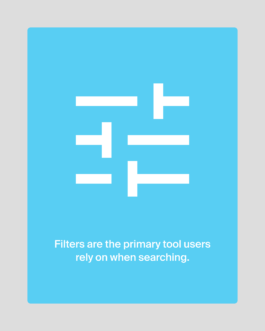
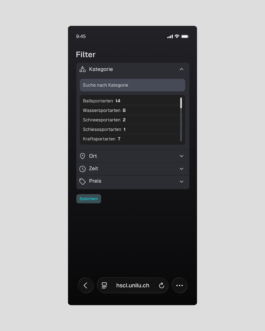
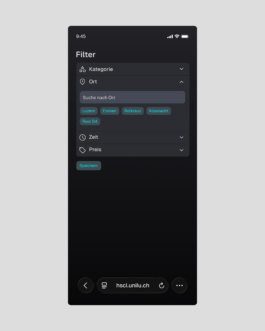
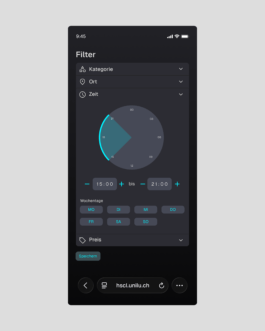
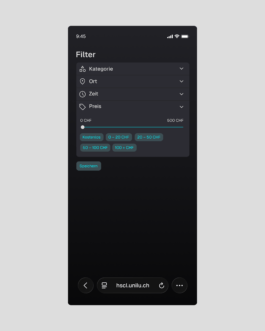
Search, filtering and navigation mattered most. Students had trouble discovering relevant courses quickly and efficiently.
Users needed faster paths and clearer availability. These insights drove the main structure and interaction decisions.

New Experience
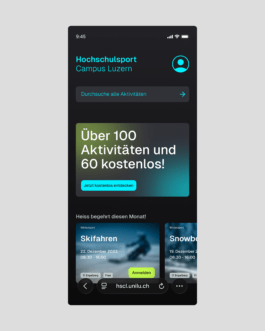
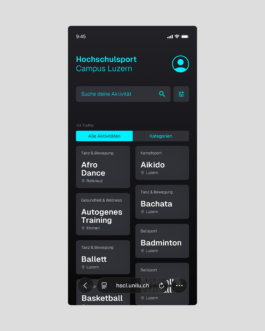
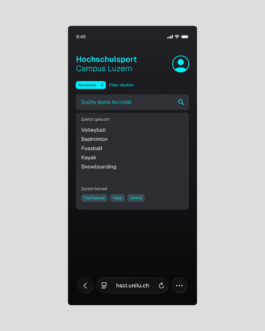
Redesigned around three pillars, Search, Favourites and Navigation. Designed mobile-first for fast student access.
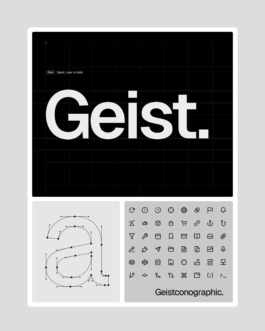
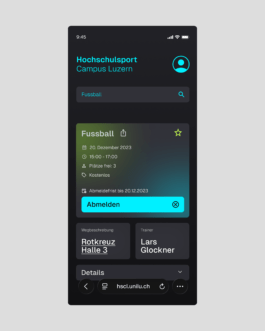
A reduced dark-based UI paired with the Geist typeface improves clarity and highlights availability states.


Final prototype
Why it matters
Final prototype
A refined mobile-first prototype that simplifies browsing and improves overall discoverability.
Students can scan options faster and navigate the offering with less effort on mobile.
PROJECT TYPE
Disciplines

OVERVIEW
Fixing key pain points, defining roles and capturing what we learned.
01 – CHALLENGE
With a large course catalogue, the HSCL sports website makes it hard to search, filter and quickly understand availability on mobile.
02 – MY ROLE
I worked across UX and UI, turning research insights into flows, interaction patterns and a consistent Figma system. I designed key screens, including the discovery landing page and course cards with clear availability states.
03 – LEARNINGS
Less debating, more testing, user feedback guided decisions. Team coordination was my biggest challenge, clear tasks, daily check-ins and communication kept us aligned on progress and next steps.


Existing Experience
The existing HSCL sports website was mainly designed for desktop and felt difficult to use on mobile-devices.


How did we tackle the problem?
We followed a rapid, iterative UX process with a strong focus on real student input. Insights from surveys and feedback sessions were quickly translated into sketches and low-fidelity prototypes, then continuously refined through testing and iteration in Figma.


What actually mattered?
User feedback highlighted search, filtering and navigation as the most critical parts of the experience. Students struggled to find relevant courses, understand availability and navigate the platform efficiently on mobile. These insights guided all major design decisions.


new Design system
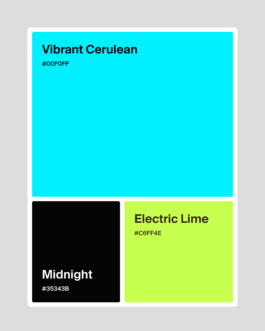
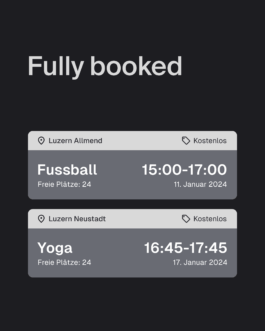
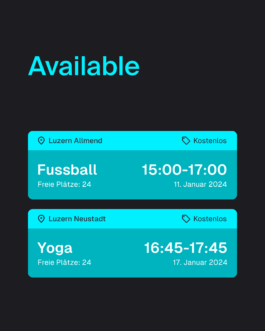
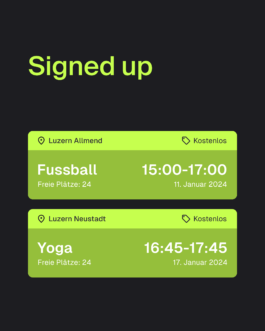
A reduced visual system with a dark base and bold accent colours, set in the Vercel Geist font, enhances clarity and highlights availability states.


New experience
We redesigned the experience around three pillars: Search, Favourites, and Navigation, built mobile-first for fast scanning and quick booking.


Visual cues
We designed the colours to communicate course status at a glance: green for courses you’re signed up for, blue for available sessions, and greyed out for fully booked ones.
Outcome
The final result is a high-fidelity mobile-first prototype that improves clarity, discoverability, and speed compared to the original website. The concept demonstrates how a large sports catalogue can feel approachable and easy to use on mobile.
Location